Connect with us

Essays

Eyes on the Horizon: An African Woman’s Hope and the Journey of Migration

With her short natural hair, steady gaze, and eyes lifted toward the horizon, a young African woman embodies quiet determination. She is not merely looking into the distance—she is looking toward possibility. Her image reminds us that migration begins long before a journey is made. It begins with hope, the courage to dream, and the belief that tomorrow can be better than today.


Published

on

makeup, cosmetics, model, african model, african female, female, girl, lady, woman, african woman, applying makeup
Photo: Shutterstock

She stands in quiet reflection, her short natural hair framing a face filled with confidence and expectation. Her eyes are fixed on the horizon, as though searching for something beyond what is immediately visible. There is no map in her hands, no suitcase by her side, and no obvious sign that she is preparing to travel. Yet her expression tells a story that millions of Africans know well—the story of hope.

Across Africa, hope has always been one of the continent’s greatest resources. It is hope that inspires young people to pursue education, entrepreneurs to build businesses, farmers to plant new crops, researchers to seek new discoveries, and families to dream of brighter futures. For many, migration begins not with movement but with aspiration. Before crossing a border, individuals first imagine what life could become.

The young woman’s short hairstyle carries its own meaning. Throughout Africa, natural hairstyles increasingly represent confidence, authenticity, and pride in one’s identity. Choosing to wear one’s natural hair reflects a growing appreciation for African beauty and heritage while embracing contemporary expressions of self. It reminds us that identity does not have to be altered to participate confidently in the global community.

Her upward gaze symbolises optimism. It suggests that the future is open, even when the path ahead is uncertain. Every year, millions of young Africans complete school, graduate from universities, launch businesses, develop innovative ideas, and prepare to contribute to their communities. Some will realise those dreams in their home countries, while others will pursue opportunities abroad. Regardless of where they build their futures, they share a common belief that tomorrow can offer greater possibilities.

Migration is often portrayed through images of movement—airports, border crossings, ships, or crowded buses. Yet every migration story begins much earlier. It begins with a decision, a dream, or a vision of a different future. It begins with someone looking beyond present circumstances and believing that change is possible.

For young African women, this journey carries unique significance. Across the continent, women are increasingly pursuing higher education, leading businesses, contributing to scientific research, serving in government, creating works of art, and transforming their communities. Their mobility reflects expanding opportunities while also highlighting the importance of overcoming barriers such as unequal access to education, employment, finance, and leadership.

The photograph also reminds us that migration is about agency. Too often, African women are portrayed only as victims of conflict, poverty, or displacement. While such realities exist and deserve attention, they do not define the experiences of all African women. Millions actively shape their own futures through education, entrepreneurship, professional careers, and international engagement. They migrate not simply because circumstances compel them but because ambition encourages them.

Looking upward also reflects resilience. Every meaningful journey involves uncertainty. There are obstacles to overcome, sacrifices to make, and risks to consider. Yet hope enables people to move forward despite these challenges. It gives individuals the confidence to pursue opportunities that may seem distant but remain attainable through perseverance.

Her image speaks not only to personal aspiration but also to Africa’s future. The continent possesses one of the world’s youngest populations, offering tremendous potential for innovation, economic growth, and social transformation. Whether these young people remain in their communities or migrate internationally, their talents, knowledge, and creativity will shape Africa’s development for generations to come.

The upward gaze can also be understood as a call to policymakers, educators, and societies. It reminds us that young people need opportunities that match their aspirations. Quality education, meaningful employment, safe mobility pathways, and inclusive institutions enable migration to become a choice rather than a necessity. When these conditions exist, migration can contribute to development for both countries of origin and destination.

Reframing Africa’s migration story requires shifting our focus from movement alone to the hopes that inspire movement. Migration is not simply the crossing of borders; it is the pursuit of dignity, opportunity, learning, and purpose. Every successful migrant was once someone who looked toward the future with quiet determination.

The young woman in the photograph reminds us that hope is itself a form of strength. She represents a generation that believes in its potential, values its identity, and refuses to allow limitations to define its future.

Her short natural hair speaks of confidence. Her steady gaze reflects courage. Her hopeful expression captures the spirit of a continent whose greatest resource is not found beneath the ground but within its people.


Continue Reading
Click to comment

Leave a Reply

Your email address will not be published. Required fields are marked *

Essays

The Young of Monkeys: Lessons for African Migration and Human Adaptation

The lives of young monkeys offer a powerful reflection on African migration, revealing how movement, learning, and survival are shaped by strong social bonds, adaptability, and the continuous search for safety and belonging

Published

on

By

ape, mandrill, africa, baboon, animal, wildlife, botswana, safari, south africa, nature, mammal, primate
Photo: Shutterstock

In the forests, savannas, and mountain regions of Africa, young monkeys grow within highly social and mobile communities. Their lives are shaped by constant movement, close family bonds, and the need to adapt quickly to changing environments. Observing the behaviour of monkey offspring offers surprising insights into the broader dynamics of migration, survival, and community in the African context.

From an early age, young monkeys learn by watching and following the group. They do not navigate the world alone; instead, they depend on collective movement for safety, food, and learning. This reflects an important parallel with human migration, where individuals and families often move together or rely on social networks to survive transitions across regions and borders. Migration, like primate movement, is rarely an isolated act—it is embedded in relationships, trust, and shared responsibility.

Another striking feature is adaptability. Young monkeys quickly adjust to new terrains, shifting food sources, and social hierarchies within their troop. Similarly, migrants in Africa and beyond must often adapt to unfamiliar cities, languages, labour markets, and cultural systems. The ability to learn, adjust, and persist becomes essential for survival and integration. In both cases, flexibility is not optional; it is a condition of life.

The social structure of monkey communities also highlights the importance of protection and mentorship. Older members guide and safeguard the young, ensuring that knowledge of the environment is transmitted across generations. This mirrors the role of families, diaspora networks, and community organisations in human migration, where support systems help newcomers navigate uncertainty and build stability in new places.

Yet, the existence of young monkeys in constant movement also reminds us that migration is not always about distance but about continuity. Even when groups shift locations, they maintain identity, cohesion, and memory. For African migration studies, this challenges narrow views of migration as rupture. Instead, it encourages us to see mobility as a form of continuity—where culture, identity, and belonging travel with people.

From the lives of monkey offspring, we learn that survival depends on connection, learning, and adaptability. These lessons extend into human migration, where movement across spaces is shaped not only by necessity but also by the enduring strength of social bonds and the ability to thrive in change.

In this way, the young of monkeys become more than a natural phenomenon—they become a mirror reflecting the dynamics of African mobility, reminding us that migration is deeply rooted in the principles of community, resilience, and shared survival.

Continue Reading

Essays

Wings Across Borders: Migration, Resilience, and the Search for Belonging

Like birds crossing borders without barriers, migration reflects humanity’s enduring search for safety, opportunity, and belonging
Published

on

By

grey crowned crane, bird, animal, crane, african crowned crane, golden crested crane, golden-crowned crane, east african crane, east african crowned crane, eastern crowned crane, south african crane, balearica regulorum, gruidae, wildlife, feathers, plumage, fauna, wilderness, nature, birdwatching, portrait, bird, crane, crane, crane, crane, crane
Photo: Shutterstock

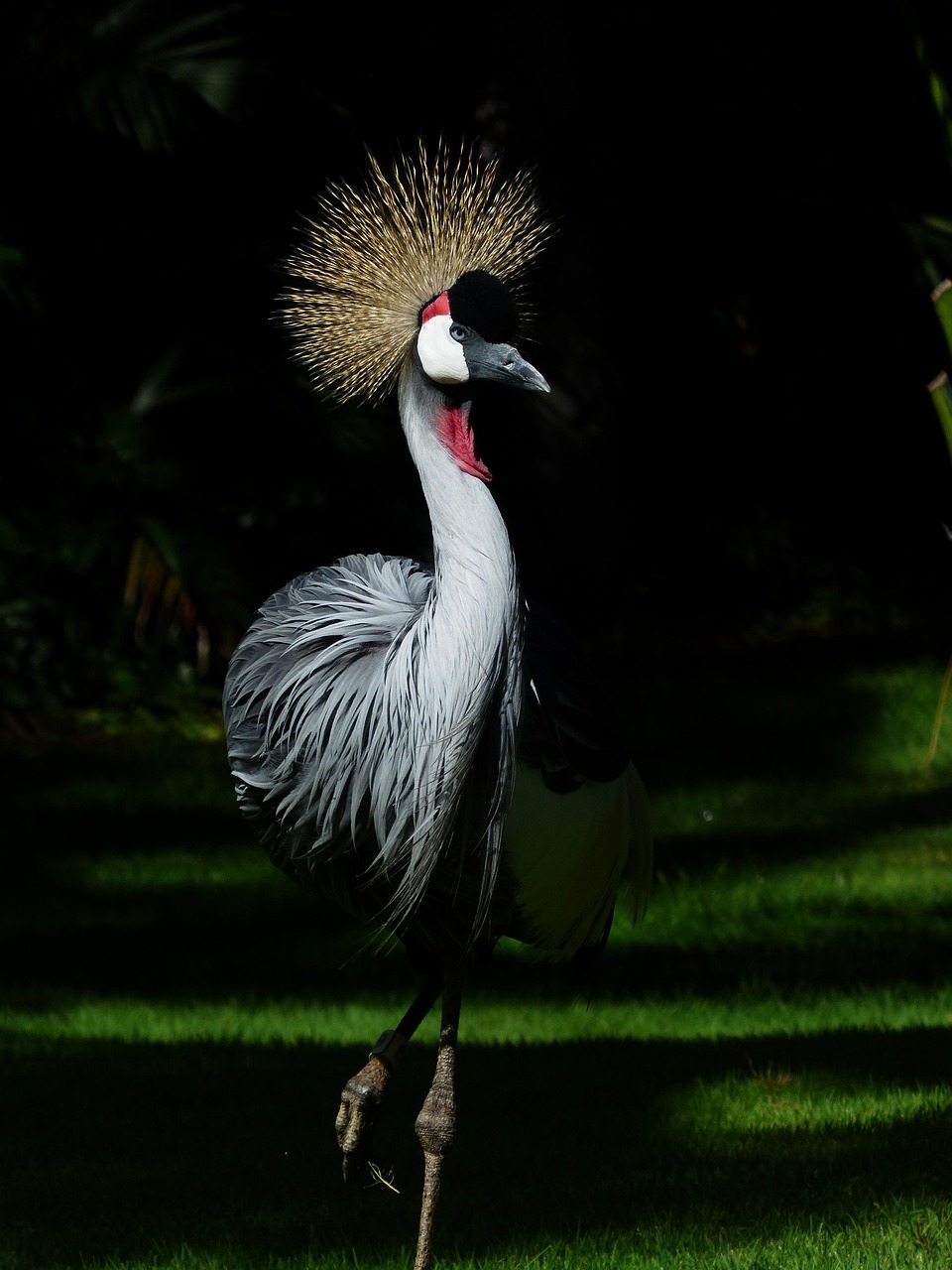
Birds have long symbolised freedom, movement, and resilience. Across continents, they travel vast distances in search of food, safety, and suitable environments for survival. Their journeys remind us that movement is a natural part of life and an essential strategy for adaptation and growth.

Human migration shares many of these characteristics. Across Africa and the world, people move for diverse reasons, including education, employment, family reunification, security, and new opportunities. Like birds navigating changing seasons, migrants often face challenges and uncertainties, yet they continue to contribute to the social, cultural, and economic development of both their countries of origin and destination.

The image of a bird in flight therefore represents more than mobility; it reflects hope, determination, and the pursuit of a better future. It reminds us that migration is not merely about crossing borders but about connecting communities, exchanging ideas, and building bridges across cultures.

\\\”At Mygration Magazine, we explore these journeys through research, policy discussions, lived experiences, and innovative solutions, helping to deepen understanding of migration’s role in shaping Africa’s present and future.\\\”

As Africa continues to experience rapid demographic, economic, and environmental change, migration will remain an important strategy for individuals and families seeking opportunities and security. Understanding these dynamics requires informed dialogue, evidence-based policies, and a commitment to social justice. Through thoughtful engagement with migration issues, we can create pathways that maximize the benefits of mobility while protecting the dignity and rights of all migrants.

Like birds whose flight paths connect distant places, migration connects people, communities, and nations. These connections remind us that our futures are increasingly intertwined and that mobility, when supported by inclusive policies and mutual understanding, can be a powerful force for development, cooperation, and shared prosperity.

Continue Reading

Essays

Across the Waters: Canoes, Courage, and Africa’s Migration Story

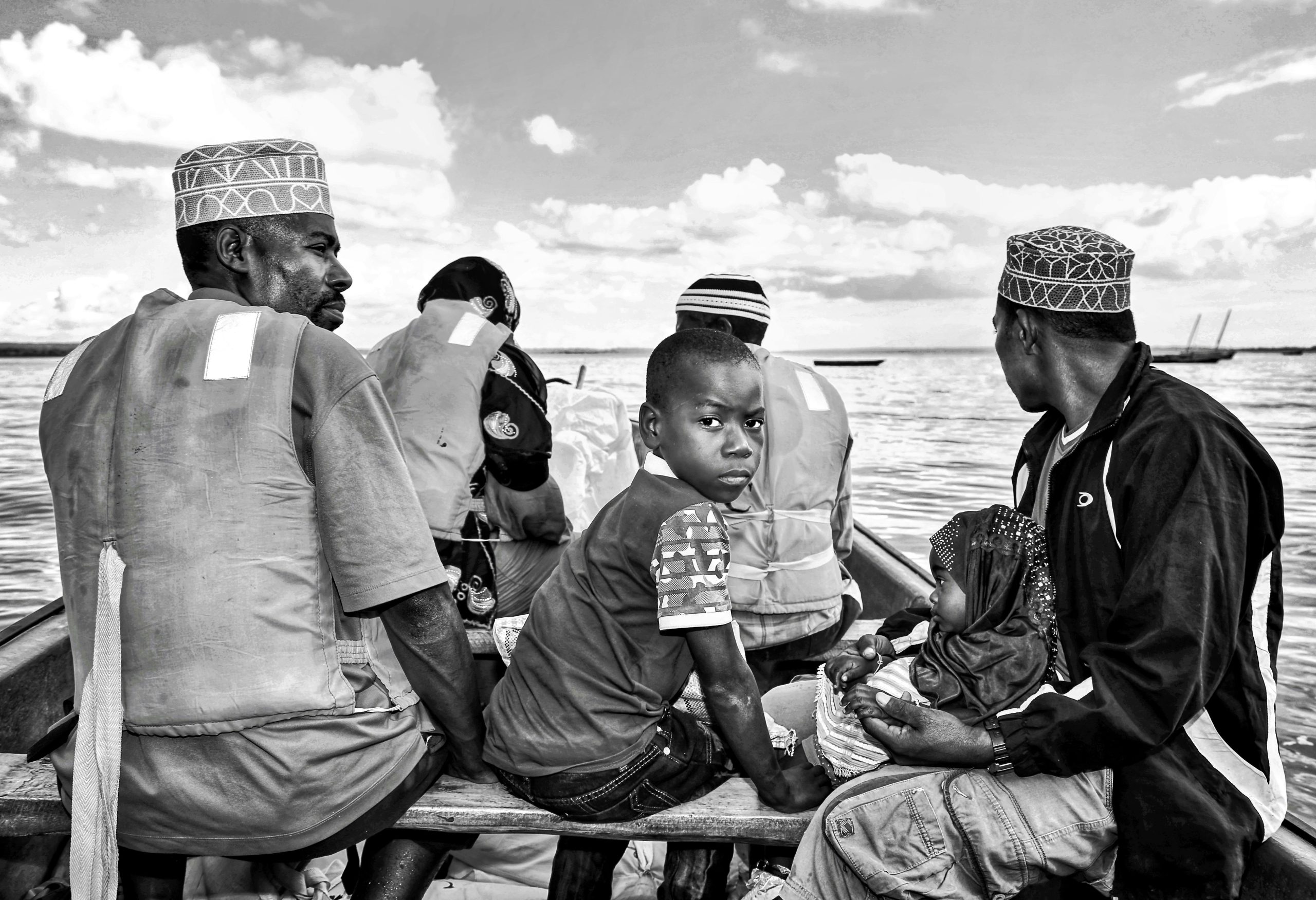
Long before roads, railways, and airports connected Africa, rivers, lakes, and coastlines served as the continent’s first highways. A canoe carrying young men across the water is more than a means of transport—it is a symbol of courage, survival, trade, and the enduring human desire to seek opportunity. Africa’s migration story has always been written not only on land, but also across its waters.

Published

on

By

Black and white photo of people on a boat in Zanzibar, Tanzania.
Photo: Shutterstock

A narrow wooden canoe glides silently across the water. Inside are young men, their paddles moving in rhythm as they navigate a river, lake, or coastal lagoon. To many, it is a simple scene of daily life. Yet beneath its simplicity lies a powerful story about Africa’s history, its people, and the enduring role of migration in shaping communities across the continent.

For thousands of years, water has connected rather than divided African societies. Before modern highways and bridges, rivers such as the Niger, Nile, Congo, and Zambezi, together with the great lakes and Atlantic and Indian Ocean coastlines, formed natural transportation networks. Canoes enabled people to travel, trade, fish, visit neighbouring communities, and establish settlements. Waterways became the lifelines of commerce and communication.

The canoe represents one of humanity’s earliest technologies. Carved from a single tree trunk or constructed from locally available materials, it reflects African ingenuity and adaptation to the natural environment. Communities living along rivers and coastlines developed sophisticated knowledge of currents, weather, tides, and navigation that allowed them to travel safely over long distances. These skills were passed from one generation to another, becoming an important part of cultural identity.

The image of young men paddling together also symbolises cooperation. A canoe rarely moves efficiently through the efforts of one individual. Each paddler contributes to the journey, relying on trust, coordination, and shared purpose. This spirit of collective effort reflects a broader African philosophy that communities thrive through mutual support rather than individual achievement alone.

Historically, waterways facilitated migration throughout Africa. Families moved in search of fertile land, fishermen followed seasonal waters, traders established new markets, and communities relocated in response to environmental change or conflict. These journeys connected distant cultures, encouraged the exchange of goods and ideas, and contributed to the growth of kingdoms and trading centres across the continent.

The canoe also tells a story of economic resilience. For countless communities, rivers and lakes remain sources of food, employment, and transportation. Fishing, agriculture, tourism, and local commerce continue to depend on waterways. The young men paddling across the water may be fishermen supplying local markets, traders transporting goods, students travelling to school, or workers commuting to neighbouring villages. Their journey reflects the everyday mobility that sustains local economies.

Migration, however, is not always driven by opportunity alone. Across Africa, changing climates, floods, droughts, declining fish stocks, and economic pressures have altered traditional livelihoods. Some young people leave their riverside communities to seek education or employment in cities, while others migrate across borders in search of new opportunities. The canoe therefore becomes a metaphor for transition—a passage from one stage of life to another.

At the same time, Africa’s waterways carry more difficult memories. Rivers and coastlines have witnessed both prosperity and tragedy, including the forced displacement of millions during the transatlantic slave trade. Acknowledging this history reminds us that movement across water has not always been voluntary. Yet it also underscores the resilience of African communities, whose descendants have preserved languages, traditions, music, and cultural identities across the globe.

Today, African migrants continue to navigate new journeys. While some travel by air or road, the motivations remain familiar: education, employment, entrepreneurship, family, safety, and hope for a better future. Their experiences remind us that migration has always been part of Africa’s story. It is neither an anomaly nor a crisis but a continuing expression of human aspiration and adaptation.

The canoe offers another lesson. It moves forward because those within it share a common direction. Likewise, successful migration depends on cooperation between migrants, communities, governments, and institutions. Policies that promote safe, orderly, and regular migration allow mobility to contribute to development while protecting the dignity and rights of those who move.

Reframing Africa’s migration story requires us to look beyond images of hardship and recognise the deeper history of movement on the continent. The canoe is not simply a vessel crossing water; it is a symbol of exploration, enterprise, resilience, and community. It reminds us that Africans have long been navigators—not only of rivers and lakes but also of changing social, economic, and cultural landscapes.

The young men paddling across the water carry more than nets or supplies. They carry ambition, responsibility, and the hopes of their families. Their journey reflects the determination that has defined African mobility for centuries—a determination to adapt, to connect, and to build a better future.

Every stroke of the paddle tells a story. Every crossing links communities. Every canoe reminds us that Africa has never stood still. Its history has always been one of movement, resilience, and discovery. To understand Africa’s migration story is to recognise that long before modern borders, its people were already crossing rivers, connecting cultures, and shaping the continent’s remarkable history.

Continue Reading

Trending

Copyright © 2026 Mygration Magazine is a multidimensional publishing and knowledge platform documenting African migrant excellence globally.