
Beyond the Caliphate: Hausa Migration, Culture, and the Making of Nigeria
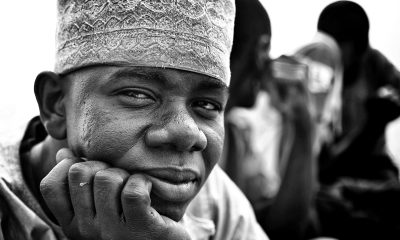
For centuries, the Hausa people have travelled across West Africa as traders, scholars, farmers, artisans, and entrepreneurs. Their migration has shaped cities, connected markets, spread knowledge, and strengthened cultural ties far beyond northern Nigeria. The Hausa story reminds us that migration is not merely movement—it is the foundation upon which societies, economies, and civilizations are built.
-


Mygration Magazine operates as a multidimensional publishing and knowledge platform
-


Knowledge Without Borders: African Scholar Migration in a Changing World
-


The Mammoth’s Legacy: What an Extinct Giant Teaches Us About Africa and Migration
-


When Africa Dances: Rhythm, Identity, and the Journey of a People

Among Nigeria’s largest and most influential ethnic groups, the Hausa have long been recognised for their rich cultural heritage, entrepreneurial spirit, and remarkable mobility. For centuries, Hausa communities have travelled across West Africa, establishing trading centres, spreading knowledge, and building networks that continue to shape economic and social life today. Their history demonstrates that migration is not a modern phenomenon but an enduring force that has contributed to the development of Nigeria and the wider African continent.
The Hausa people are predominantly found in northern Nigeria and southern Niger, although sizeable communities live in Ghana, Cameroon, Chad, Benin, Togo, Côte d’Ivoire, Sudan, and many other countries. Their widespread presence reflects centuries of movement driven by trade, scholarship, agriculture, pilgrimage, and commerce.
Long before colonial borders divided West Africa, Hausa merchants travelled extensively along trans-Saharan trade routes linking West Africa with North Africa. They exchanged leather goods, textiles, grains, salt, livestock, kola nuts, and other commodities, creating commercial networks that connected distant communities. These routes did more than transport goods—they facilitated the exchange of languages, ideas, technologies, religious beliefs, and cultural traditions.
Migration became central to Hausa identity. Young men often travelled to learn trades, establish businesses, or seek employment in neighbouring towns and countries. This culture of mobility encouraged resilience, independence, and entrepreneurship. Even today, Hausa traders can be found in virtually every major market across Nigeria and throughout much of West Africa, contributing significantly to regional commerce.
One of the defining features of Hausa culture is its commitment to trade. Markets such as Kano have historically served as major commercial centres attracting merchants from across Africa. Generations of Hausa entrepreneurs developed extensive business networks built on trust, reputation, and long-term relationships. These networks continue to facilitate regional trade despite the emergence of modern transportation and digital commerce.
Migration also strengthened the spread of education. Islamic scholarship has long occupied an important place within Hausa society. Scholars travelled between learning centres to study theology, law, literature, astronomy, and philosophy, contributing to the growth of Islamic education throughout the region. The movement of scholars helped establish northern Nigeria as an important intellectual centre within West Africa.
Language has been another powerful vehicle of migration. Hausa has become one of Africa’s most widely spoken languages and serves as a lingua franca across much of northern Nigeria and neighbouring countries. Through migration and trade, the language has connected people from diverse ethnic backgrounds, facilitating commerce, diplomacy, and cultural exchange across national boundaries.
Hausa culture is equally rich in artistic expression. Traditional attire such as the flowing Babban Riga, embroidered caps, colourful wrappers, and finely crafted leather products reflect centuries of craftsmanship. Music, praise poetry, storytelling, architecture, festivals, and cuisine remain central to Hausa cultural identity, both within Nigeria and among diaspora communities abroad.
Migration has also transformed Hausa communities themselves. Rural-to-urban migration has contributed to the rapid growth of cities such as Kano, Kaduna, Katsina, Sokoto, and Abuja, while international migration has created vibrant Hausa communities across Africa, Europe, North America, and the Middle East. Modern technology now enables migrants to maintain close connections with their families and communities through remittances, business investments, and digital communication.
Like many migrant communities, the Hausa have also experienced challenges. Economic inequality, environmental pressures, insecurity, urbanisation, and changing labour markets continue to influence migration patterns. Young people increasingly migrate to cities seeking education and employment, while others pursue opportunities abroad. These movements present both opportunities and challenges for families, local communities, and policymakers.
The Hausa migration story also illustrates the importance of peaceful coexistence. Throughout history, Hausa traders have lived alongside numerous ethnic and religious communities, demonstrating how commerce can foster cooperation across cultural differences. Markets have often served not only as centres of economic activity but also as spaces where languages, traditions, and ideas meet.
For Nigeria, the Hausa experience underscores a broader truth: migration has been one of the country’s greatest strengths. The movement of people has expanded markets, enriched cultures, spread knowledge, and strengthened national development. Rather than viewing migration solely through the lens of displacement or border control, it should also be understood as a driver of innovation, entrepreneurship, and regional integration.
Reframing Nigeria’s migration story therefore requires recognising the contributions of communities like the Hausa, whose mobility has shaped the country’s economic and cultural landscape for centuries. Their journeys remind us that migration is not simply about leaving one place for another—it is about building connections that transcend geography.
Every Hausa trader who establishes a market stall, every scholar who crosses borders in pursuit of knowledge, and every family that settles in a new community contributes to a larger story of resilience and opportunity. Their experiences reflect the enduring spirit of a people who have transformed movement into enterprise, diversity into strength, and migration into a pathway for development.
The Hausa migration story is ultimately a Nigerian story—and an African story. It reminds us that borders may define nations, but it is the movement of people, ideas, and cultures that builds civilizations. In celebrating the Hausa people, we celebrate one of the many communities whose journeys continue to shape Nigeria’s past, enrich its present, and inspire its future.

Culture
Knowledge Without Borders: African Scholar Migration in a Changing World
African scholars have always crossed borders in pursuit of knowledge, opportunity, and collaboration. Yet behind every academic journey lies a complex story of ambition, sacrifice, unequal opportunities, and the enduring hope of contributing to Africa’s development. Reframing African scholar migration means moving beyond the language of “brain drain” to recognise the transformative potential of knowledge mobility.

Knowledge Without Borders: African Scholar Migration in a Changing World
The pursuit of knowledge has never respected national borders. For centuries, scholars have travelled across continents in search of learning, collaboration, and intellectual discovery. From the ancient libraries of Timbuktu to today’s leading universities in Europe, North America, Asia, and Australia, African scholars have long participated in the global exchange of ideas. Their journeys reflect not only personal ambition but also the broader realities of inequality, opportunity, and development that continue to shape Africa’s place in the global knowledge economy.
Academic migration is often portrayed through the narrow lens of “brain drain”—the departure of highly educated professionals from developing countries to wealthier nations. While this narrative captures legitimate concerns about the loss of skilled professionals, it oversimplifies a far more complex phenomenon. African scholar migration is not merely a story of departure; it is also a story of connection, collaboration, innovation, and the circulation of knowledge.
Each year, thousands of African academics, researchers, doctoral students, and postdoctoral fellows relocate to universities around the world. Many are drawn by access to advanced research facilities, competitive funding opportunities, stronger academic networks, and environments that support scientific inquiry. For some, migration provides opportunities unavailable at home, including specialised laboratories, world-class libraries, interdisciplinary collaboration, and stable research funding.
Yet these opportunities often emerge against a backdrop of persistent challenges within African higher education systems. Limited research funding, ageing infrastructure, heavy teaching loads, bureaucratic constraints, inadequate postgraduate supervision capacity, and political instability continue to affect many universities across the continent. In some contexts, scholars also contend with restrictions on academic freedom, making international mobility an attractive or necessary pathway for intellectual growth.
The decision to migrate is therefore rarely a rejection of Africa. More often, it is a search for conditions that allow scholars to realise their full potential. Many retain deep professional and emotional ties to their home countries, maintaining research collaborations, supervising students, publishing jointly with African colleagues, and contributing to policy development and institutional capacity-building from abroad.
The growing African academic diaspora represents one of the continent’s most valuable yet underutilised resources. Across the world’s leading universities and research institutions, African scholars are making significant contributions in medicine, engineering, artificial intelligence, climate science, economics, public health, education, migration studies, agriculture, and countless other fields. Their work advances global knowledge while simultaneously creating opportunities to strengthen research capacity within Africa.
Digital technologies have transformed how scholarly migration is understood. Knowledge no longer moves only through permanent relocation. Virtual supervision, international research networks, online conferences, collaborative publications, and joint grant applications have enabled scholars to contribute across borders without necessarily returning permanently. These forms of transnational engagement demonstrate that academic mobility can generate mutual benefits for both origin and destination countries.
Despite these opportunities, African scholars continue to face important challenges abroad. Many encounter barriers to career progression, difficulties in obtaining research funding, restrictive immigration policies, visa uncertainties, and the under-recognition of qualifications and expertise. Others experience subtle forms of discrimination, underrepresentation in leadership positions, or unequal access to international research partnerships. Such obstacles remind us that academic excellence alone does not always guarantee equal opportunity within global higher education.
Women scholars often experience additional challenges. Balancing academic careers with family responsibilities, navigating gender inequalities, and overcoming structural barriers to leadership remain significant concerns both within Africa and internationally. Supporting the mobility and advancement of African women scholars is therefore essential to building more inclusive knowledge systems.
The conversation must also move beyond the outdated binary of “brain drain” versus “brain gain.” Increasingly, researchers speak of brain circulation, knowledge mobility, and global scientific collaboration. These concepts recognise that scholars frequently move between countries throughout their careers, creating networks that facilitate innovation, technology transfer, policy learning, and institutional partnerships. Rather than representing a permanent loss, migration can become a mechanism through which expertise flows back to the continent in multiple forms.
Governments, universities, and international organisations all have important roles to play. Investing in research infrastructure, expanding doctoral education, strengthening research funding, protecting academic freedom, supporting international collaboration, and engaging the African academic diaspora are essential strategies for building globally competitive universities. Equally important is creating environments in which talented scholars choose to remain, return, or maintain active partnerships with institutions across Africa.
Reframing African scholar migration requires recognising scholars not as symbols of loss but as ambassadors of knowledge. Whether they teach in Lagos, Nairobi, Pretoria, London, Toronto, Melbourne, or Doha, African academics continue to shape ideas that influence societies far beyond national borders. Their contributions demonstrate that intellectual capital is not diminished by movement; it is often strengthened through exchange.
The future of Africa’s development will depend not only on retaining talent but also on connecting talent across continents. Universities, governments, and research institutions must therefore embrace mobility as an opportunity for partnership rather than viewing migration solely as a challenge to be managed.
Every African scholar who crosses a border carries more than a passport and a curriculum vitae. They carry the intellectual traditions of a continent, the aspirations of future generations, and the possibility of building bridges between Africa and the world. Their journeys remind us that knowledge grows through movement, collaboration, and shared purpose.
In reframing Africa’s migration story, the migration of scholars stands as one of the continent’s greatest opportunities—not because its brightest minds leave, but because wherever they go, they continue to illuminate pathways for Africa’s future.
Culture
The Mammoth’s Legacy: What an Extinct Giant Teaches Us About Africa and Migration
Neque porro quisquam est, qui dolorem ipsum quia dolor sit amet, consectetur, adipisci velit, sed quia non numquam.

Culture
When Africa Dances: Rhythm, Identity, and the Journey of a People
The women dance in unison, their movements echoing the heartbeat of generations. Every step, every drumbeat, and every song tells a story of identity, resilience, and belonging. African dance is more than performance—it is a living language that has travelled with migrants across continents, preserving culture while building new communities far from home.



Wings Across Borders: Migration, Resilience, and the Search for Belonging

Weaving Futures: African Women, Tradition, and the Threads of Migration

The Young of Monkeys: Lessons for African Migration and Human Adaptation
-

 Stories4 months ago
Lines of Identity: The Story Behind African Tribal Mark
-
Culture4 months ago
Knowledge Without Borders: African Scholar Migration in a Changing World
-

 Stories4 months ago
The Heart of Community: Zambia’s Traditional Marketplace and the Spirit of Enterprise
-
 Culture4 months ago
The Wisdom of the Elders: African Proverbs, Parables, and the Art of Guiding the Next Generation
-

 News4 months ago
Woven with Pride: Ghana’s Kente Cloth, Beads, and the Story of Cultural Identity
-
Culture4 months ago
The Mammoth’s Legacy: What an Extinct Giant Teaches Us About Africa and Migration
-
Culture4 months ago
When Africa Dances: Rhythm, Identity, and the Journey of a People
-

 Awards4 months ago
Carved Beauty: The African Woman in Sculpture and the Story of Heritage