
Culture
Paddling Forward: An African Woman’s Journey of Courage and Migration
With neatly braided hair, steady hands, and unwavering determination, an African woman paddles a modern canoe across calm waters. She is not fleeing her homeland; she is exploring new horizons. Her journey reflects the changing face of Africa—where women are increasingly leading, innovating, and navigating opportunities beyond traditional boundaries. Her story reminds us that migration is as much about courage and possibility as it is about movement.


The morning sun casts a golden glow across the water as a young African woman gently pushes her modern canoe away from the shore. Her braided hairstyle reflects generations of cultural heritage, while her practical clothing and lightweight canoe speak to a contemporary Africa embracing innovation and adventure. With each stroke of the paddle, she moves confidently across the water, guided by purpose rather than fear.
To an observer, it may appear to be a simple recreational journey. Yet the image tells a much deeper story about Africa, women, and migration. It is a story of confidence, resilience, and the willingness to explore new possibilities while remaining firmly connected to one’s roots.
For centuries, Africa’s rivers, lakes, and coastlines have served as pathways of movement. Communities travelled by canoe to fish, trade, visit neighbouring villages, and establish new settlements. Water connected people long before roads and airports did. Today, the canoe remains a powerful symbol of exploration, reminding us that movement has always been part of Africa’s history.
What makes this image especially significant is that the person holding the paddle is a woman. Across Africa, women have always contributed to the social and economic life of their communities—as farmers, traders, educators, artisans, caregivers, and entrepreneurs. Increasingly, they are also becoming researchers, engineers, business leaders, athletes, pilots, innovators, and public servants. Their journeys reflect a continent in which women are expanding opportunities while challenging traditional limitations.
Her braided hair carries its own story. Braiding is one of Africa’s oldest artistic traditions, passed from mothers to daughters and between generations. Hairstyles often communicate cultural identity, creativity, age, and community. Even when African women migrate abroad, braided hairstyles remain an enduring expression of heritage and pride. In many cities around the world, African braiding salons have become spaces where culture, entrepreneurship, and community flourish.
The modern canoe introduces another dimension. It represents adaptation. Africa honours its traditions while embracing new technologies and ideas. The canoe is no longer simply a carved wooden vessel used for survival; it also becomes a symbol of sport, tourism, recreation, environmental awareness, and personal freedom. It reminds us that African identity is dynamic, continually evolving without losing its cultural foundations.
This balance between heritage and innovation mirrors the experience of migration itself. Migrants often carry their traditions into unfamiliar environments while learning new skills, languages, and customs. They do not leave their identities behind. Instead, they build lives that combine the values of home with the opportunities of new destinations.
The woman paddling confidently across the water also challenges common narratives about migration. Too often, migration is portrayed only through images of crisis, displacement, or vulnerability. Yet millions of Africans migrate voluntarily to pursue education, careers, entrepreneurship, research, cultural exchange, and adventure. Their journeys are driven not only by necessity but also by aspiration.
Women increasingly stand at the centre of these stories. African women study abroad, establish international businesses, lead humanitarian organisations, contribute to scientific research, and participate in global sports and cultural exchanges. Their mobility reflects growing opportunities while also highlighting the importance of addressing barriers such as unequal access to education, finance, and leadership.
Water itself becomes a powerful metaphor. It can appear calm or turbulent, predictable or uncertain. Yet those who understand how to navigate it move forward with confidence. Migration often resembles this journey. It requires preparation, resilience, adaptability, and courage. Every paddle stroke represents a decision to keep moving despite uncertainty.
The canoe also reminds us that no journey is made entirely alone. Behind the woman are the generations who taught her resilience, the family who encouraged her dreams, the community that shaped her values, and the culture she proudly represents. Every migrant carries these invisible companions wherever they go.
Reframing Africa’s migration story requires us to celebrate such images. They reveal a continent defined not by helplessness but by determination, innovation, and hope. They show African women not as passive observers of change but as active navigators of their own futures.
The woman with braided hair paddling across open water is more than an adventurer. She is a symbol of a new generation of Africans who confidently embrace the world while remaining rooted in their heritage. She reminds us that migration is not simply the crossing of geographical boundaries—it is the courage to explore new possibilities without forgetting where you began.
Every braid tells the story of heritage. Every stroke of the paddle reflects determination. Every ripple left behind marks a journey of growth.





Culture
Knowledge Without Borders: African Scholar Migration in a Changing World
African scholars have always crossed borders in pursuit of knowledge, opportunity, and collaboration. Yet behind every academic journey lies a complex story of ambition, sacrifice, unequal opportunities, and the enduring hope of contributing to Africa’s development. Reframing African scholar migration means moving beyond the language of “brain drain” to recognise the transformative potential of knowledge mobility.
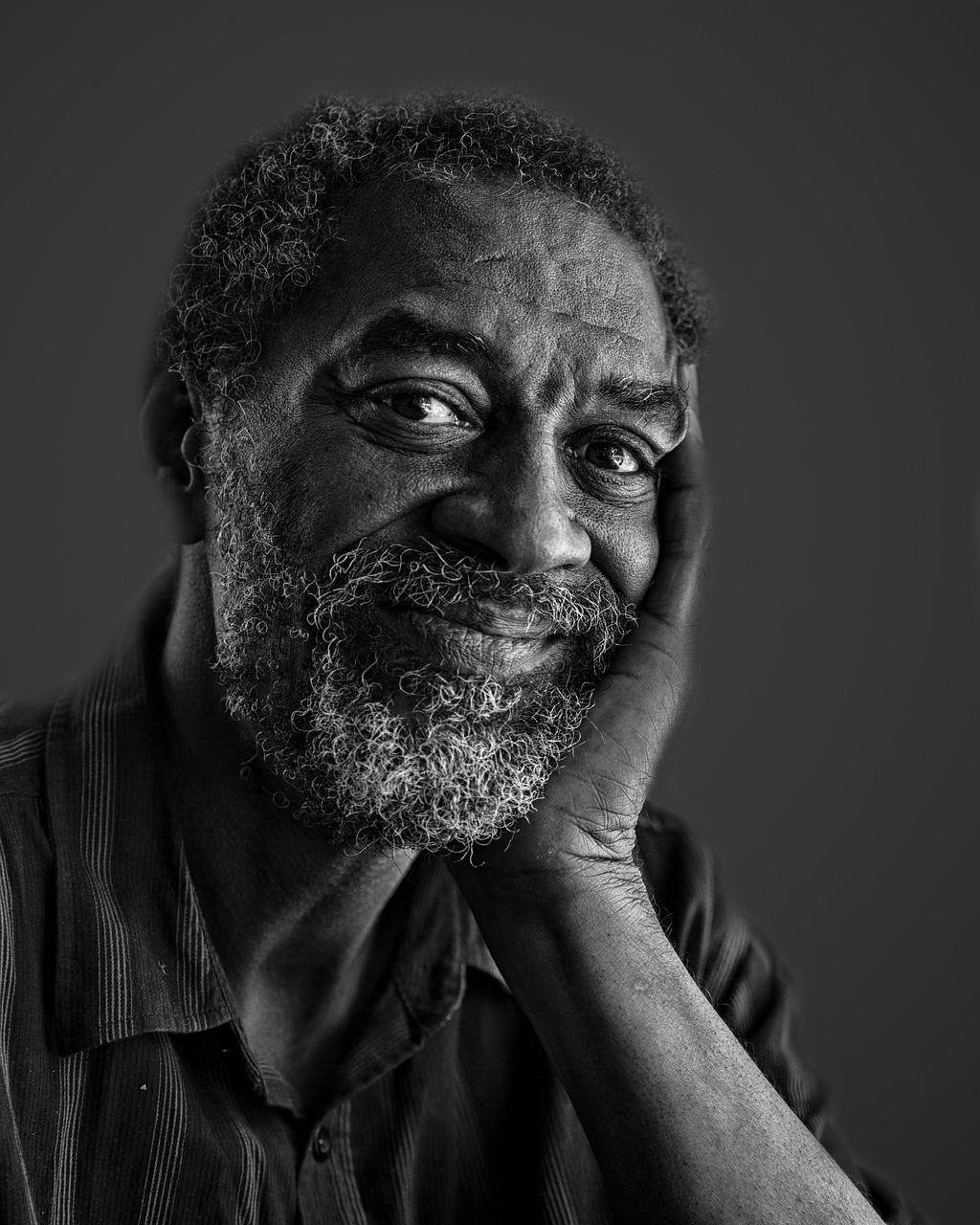
Knowledge Without Borders: African Scholar Migration in a Changing World
The pursuit of knowledge has never respected national borders. For centuries, scholars have travelled across continents in search of learning, collaboration, and intellectual discovery. From the ancient libraries of Timbuktu to today’s leading universities in Europe, North America, Asia, and Australia, African scholars have long participated in the global exchange of ideas. Their journeys reflect not only personal ambition but also the broader realities of inequality, opportunity, and development that continue to shape Africa’s place in the global knowledge economy.
Academic migration is often portrayed through the narrow lens of “brain drain”—the departure of highly educated professionals from developing countries to wealthier nations. While this narrative captures legitimate concerns about the loss of skilled professionals, it oversimplifies a far more complex phenomenon. African scholar migration is not merely a story of departure; it is also a story of connection, collaboration, innovation, and the circulation of knowledge.
Each year, thousands of African academics, researchers, doctoral students, and postdoctoral fellows relocate to universities around the world. Many are drawn by access to advanced research facilities, competitive funding opportunities, stronger academic networks, and environments that support scientific inquiry. For some, migration provides opportunities unavailable at home, including specialised laboratories, world-class libraries, interdisciplinary collaboration, and stable research funding.
Yet these opportunities often emerge against a backdrop of persistent challenges within African higher education systems. Limited research funding, ageing infrastructure, heavy teaching loads, bureaucratic constraints, inadequate postgraduate supervision capacity, and political instability continue to affect many universities across the continent. In some contexts, scholars also contend with restrictions on academic freedom, making international mobility an attractive or necessary pathway for intellectual growth.
The decision to migrate is therefore rarely a rejection of Africa. More often, it is a search for conditions that allow scholars to realise their full potential. Many retain deep professional and emotional ties to their home countries, maintaining research collaborations, supervising students, publishing jointly with African colleagues, and contributing to policy development and institutional capacity-building from abroad.
The growing African academic diaspora represents one of the continent’s most valuable yet underutilised resources. Across the world’s leading universities and research institutions, African scholars are making significant contributions in medicine, engineering, artificial intelligence, climate science, economics, public health, education, migration studies, agriculture, and countless other fields. Their work advances global knowledge while simultaneously creating opportunities to strengthen research capacity within Africa.
Digital technologies have transformed how scholarly migration is understood. Knowledge no longer moves only through permanent relocation. Virtual supervision, international research networks, online conferences, collaborative publications, and joint grant applications have enabled scholars to contribute across borders without necessarily returning permanently. These forms of transnational engagement demonstrate that academic mobility can generate mutual benefits for both origin and destination countries.
Despite these opportunities, African scholars continue to face important challenges abroad. Many encounter barriers to career progression, difficulties in obtaining research funding, restrictive immigration policies, visa uncertainties, and the under-recognition of qualifications and expertise. Others experience subtle forms of discrimination, underrepresentation in leadership positions, or unequal access to international research partnerships. Such obstacles remind us that academic excellence alone does not always guarantee equal opportunity within global higher education.
Women scholars often experience additional challenges. Balancing academic careers with family responsibilities, navigating gender inequalities, and overcoming structural barriers to leadership remain significant concerns both within Africa and internationally. Supporting the mobility and advancement of African women scholars is therefore essential to building more inclusive knowledge systems.
The conversation must also move beyond the outdated binary of “brain drain” versus “brain gain.” Increasingly, researchers speak of brain circulation, knowledge mobility, and global scientific collaboration. These concepts recognise that scholars frequently move between countries throughout their careers, creating networks that facilitate innovation, technology transfer, policy learning, and institutional partnerships. Rather than representing a permanent loss, migration can become a mechanism through which expertise flows back to the continent in multiple forms.
Governments, universities, and international organisations all have important roles to play. Investing in research infrastructure, expanding doctoral education, strengthening research funding, protecting academic freedom, supporting international collaboration, and engaging the African academic diaspora are essential strategies for building globally competitive universities. Equally important is creating environments in which talented scholars choose to remain, return, or maintain active partnerships with institutions across Africa.
Reframing African scholar migration requires recognising scholars not as symbols of loss but as ambassadors of knowledge. Whether they teach in Lagos, Nairobi, Pretoria, London, Toronto, Melbourne, or Doha, African academics continue to shape ideas that influence societies far beyond national borders. Their contributions demonstrate that intellectual capital is not diminished by movement; it is often strengthened through exchange.
The future of Africa’s development will depend not only on retaining talent but also on connecting talent across continents. Universities, governments, and research institutions must therefore embrace mobility as an opportunity for partnership rather than viewing migration solely as a challenge to be managed.
Every African scholar who crosses a border carries more than a passport and a curriculum vitae. They carry the intellectual traditions of a continent, the aspirations of future generations, and the possibility of building bridges between Africa and the world. Their journeys remind us that knowledge grows through movement, collaboration, and shared purpose.
In reframing Africa’s migration story, the migration of scholars stands as one of the continent’s greatest opportunities—not because its brightest minds leave, but because wherever they go, they continue to illuminate pathways for Africa’s future.
Culture
The Mammoth’s Legacy: What an Extinct Giant Teaches Us About Africa and Migration
Neque porro quisquam est, qui dolorem ipsum quia dolor sit amet, consectetur, adipisci velit, sed quia non numquam.

Culture
When Africa Dances: Rhythm, Identity, and the Journey of a People
The women dance in unison, their movements echoing the heartbeat of generations. Every step, every drumbeat, and every song tells a story of identity, resilience, and belonging. African dance is more than performance—it is a living language that has travelled with migrants across continents, preserving culture while building new communities far from home.



Wings Across Borders: Migration, Resilience, and the Search for Belonging

Weaving Futures: African Women, Tradition, and the Threads of Migration

The Young of Monkeys: Lessons for African Migration and Human Adaptation

-
 Stories4 months ago
Lines of Identity: The Story Behind African Tribal Mark
-

 Culture4 months ago
Knowledge Without Borders: African Scholar Migration in a Changing World
-
 Stories4 months ago
The Heart of Community: Zambia’s Traditional Marketplace and the Spirit of Enterprise
-
 Culture4 months ago
The Wisdom of the Elders: African Proverbs, Parables, and the Art of Guiding the Next Generation
-
 News4 months ago
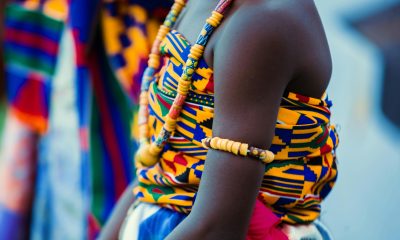
Woven with Pride: Ghana’s Kente Cloth, Beads, and the Story of Cultural Identity
-

 Culture4 months ago
The Mammoth’s Legacy: What an Extinct Giant Teaches Us About Africa and Migration
-

 Culture4 months ago
When Africa Dances: Rhythm, Identity, and the Journey of a People
-

 Awards4 months ago
Carved Beauty: The African Woman in Sculpture and the Story of Heritage